Read Time: 5 minutes
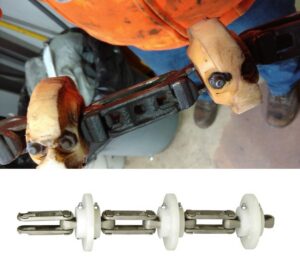
Strategic Maintenance of Mechanical Conveying Equipment: Protecting Uptime in Bulk Solids Processing
In dry processing environments, performance is often discussed in terms of throughput, yield, automation, and energy efficiency. Less visible — but equally influential — is the condition of the mechanical…

Read Time: 3 minutes
How Experience Shapes Better Material Handling Decisions
Why the Right Answer Isn’t Always the Equipment You Sell In manufacturing, material handling problems rarely fail because of equipment alone. More often, they fail because material behavior is misunderstood…

Read Time: 2 minutes
Honoring 30 Years of Experience: Celebrating Mike Zeluff
Thirty years with one company is an achievement. Thirty years spent helping customers make better decisions is a legacy. Mike Zeluff joined Hapman in 1996, starting his career in the…
Read Time: 2 minutes
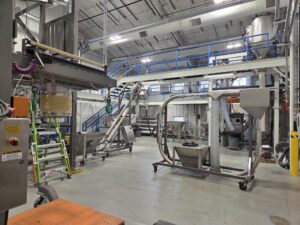
Hapman’s Expanded Test Lab Helps Processors Reduce Risk Before Equipment Is Installed
Selecting the right bulk material handling equipment shouldn’t involve guesswork. That’s why Hapman has expanded its full-scale test lab—to give processors a clearer, lower-risk path to system design before equipment…
Read Time: 2 minutes
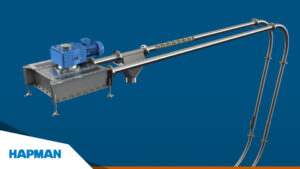
Hapman CablePro™ Tubular Drag Conveyor: Engineered for Uptime. Designed for Easy Cleaning.
CablePro is here—and built for the job. Leveraging decades of bulk material handling expertise and the proven performance of our TubePro™ tubular drag conveyor, CablePro provides efficient, hygienic conveying with…
Read Time: 5 minutes
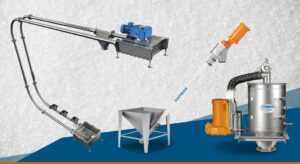
Comparing Conveying Technologies for Food Powder Handling
Design Considerations for Product Integrity, System Layout, and Operational Performance Selecting a conveying method for food powder handling is rarely a simple decision. Dry ingredients vary widely in physical behavior,…

Read Time: 2 minutes
Understanding Material Handling in Powder and Bulk Solids
How Material Characteristics Influence Conveying and Processing Performance Material handling problems rarely start with the equipment—they start with the material. In this webinar, Hapman Vice President Matt Richardson explains how…
Read Time: 2 minutes
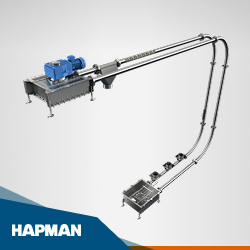
Gentle, Hygienic Conveying for Delicate Foods
Inside Hapman’s CablePro™ Tubular Drag Conveyor Hapman’s CablePro™ Tubular Drag conveyor gives consumers and pet food processors a gentle, hygienic way to move fragile products while supporting strict industry standards.…

Read Time: < 1 minute
Hapman’s WEFTEC 2025 Booth Draws Attention for Practical Wastewater Equipment
Hapman’s booth at WEFTEC 2025 was a key destination for water industry professionals seeking practical, results-driven material handling equipment tailored for wastewater facilities. The event in Chicago gave attendees a…
Read Time: 2 minutes
Hapman Showcases Bulk Material Solutions at PACK EXPO 2025
At PACK EXPO 2025, Hapman set a new standard for material handling performance as visitors experienced the company’s trusted solutions up close. The Hapman team welcomed attendees to Booth N-6060…
Read Time: 3 minutes
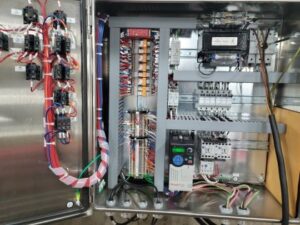
Smart Controls: Keeping Bulk Material Handling Efficient and Reliable
Practical Automation for Everyday Operations Automation has become an essential part of bulk material handling and helps facilities run efficiently, safely, and cost-effectively. Reliable control systems keep materials moving and…

Read Time: 2 minutes
Hapman at IBIE 2025: Bulk Material Handling Experts
Hapman attended the International Baking Industry Exposition (IBIE) 2025, held at the Las Vegas Convention Center from September 13-17. At Booth 7716, Hapman’s experts connected with bakery professionals and demonstrated…
Read Time: 2 minutes
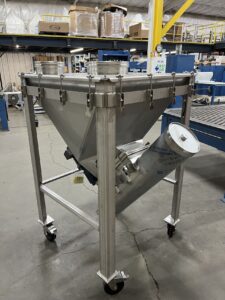
Dust is more than a nuisance; it’s a challenge that impacts safety, regulatory compliance, and operational efficiency across industries. At Hapman, we recognize that effective dust control is essential for…
Read Time: 3 minutes
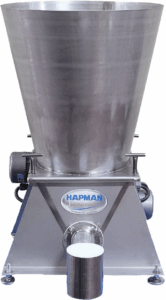
Challenges to Consider When Selecting a Feeder
Moving dry bulk materials in industrial settings comes with unique challenges, especially when handling substances that are abrasive, sticky, or prone to clumping. These difficult-to-handle materials can disrupt operations, decrease…

Read Time: < 1 minute
VODCAST: How the Right Feeder Solves Big Problems with Dry Bulk Material
A Conversation with Ryan Coburn, Technical Sales Specialist at Hapman In our latest discussion, we delve into the critical role of feeders in managing challenging dry bulk materials. Ryan Coburn,…
Read Time: 2 minutes
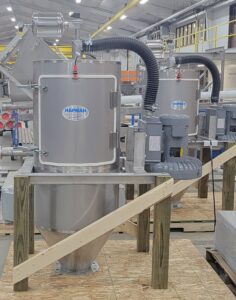
Efficient Material Handling with Vacuum Conveyors
In bulk material handling, efficiency and versatility are paramount. Vacuum Conveyors are designed to optimize material movement across various sectors, ensuring cost-effective and reliable operations. Key Features of Hapman Vacuum…

Read Time: < 1 minute
Quick-Ship Conveyors: Rapid Solutions for Changing Manufacturing Demands
In today’s fast-paced manufacturing world, adaptability is key. Hapman understands this, which is why we’re excited to highlight our Quick-Ship program for Helix Flexible Screw Conveyors. This innovative solution is…
Read Time: 7 minutes
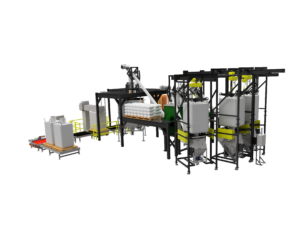
Efficiency in Batching & Blending: 4 Common Challenges and How to Fix Them
There’s no single solution for any given material handling, batching, or blending application. Significant efficiency improvements require varying degrees of customization to meet your material, processing, and business goals. Asking…
Read Time: 3 minutes
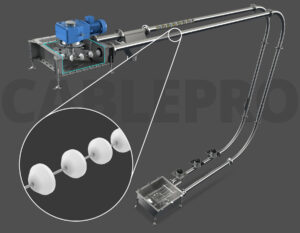
Introducing Hapman’s CablePro™ Tubular Drag Conveyor
Unveiling Innovation at PACK EXPO 2024 In the dynamic world of food processing and packaging, innovation is the key to maintaining product quality and operational efficiency. Hapman, a renowned leader…
Read Time: 3 minutes
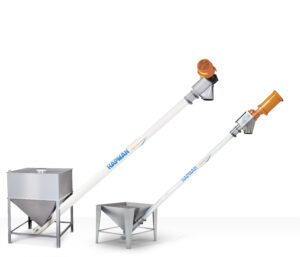
Elevating Material Handling Efficiency with the Helix® Flexible Screw Conveyor
In material handling, reliability and adaptability are key to maintaining smooth operations across industries. Since 1977, Hapman’s Helix® Flexible Screw Conveyor has been a trusted solution for businesses seeking efficient…

Read Time: 4 minutes
Eductors: What Are They and How Do They Work?
When creating a fluid or pneumatic conveyor system, eductors can be a good options in place of fans, blowers, and pumps. Eductors are jet pumps to create a vacuum that can…
Read Time: 4 minutes
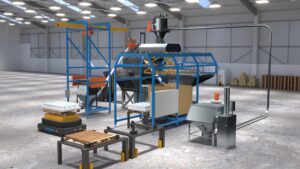
Using Material Handling Automation to Improve Efficiency
Take a closer look at three main types of material handling automation and the Hapman difference in designing and integrating automation systems.
Read Time: 3 minutes
Challenges in Conveying Bulk Materials
When plants deal with bulk material well, all of their operations become easier. But challenges in bulk material handling lead to many problems, including inefficiencies, degradation and material segregation. Plants…
Read Time: 2 minutes
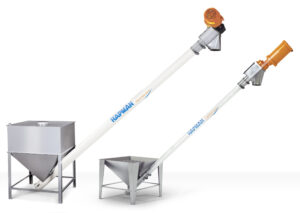
3 Reasons to Customize Your Flexible Screw Conveyor Design
Flexible screw conveyors are popular for their simplicity, versatility, and cost-effectiveness — but not all systems perform the same. When a conveyor isn’t engineered for your specific material or process,…

Read Time: 2 minutes
USDA Certified or 3-A Approved: What’s the Difference?
When choosing equipment for dairy processing or manufacturing facilities, confusion often arises between USDA Certified and 3-A Approved equipment. Both designations relate to hygienic design, but they differ in certification…

Read Time: 2 minutes
Small Dust Control, Big Safety Gains: How Localized Collection Reduces Risk
Dust control and risk mitigation go hand in hand for manufacturers that process dry powders or other bulk materials. Managing airborne particulate isn’t just about keeping facilities clean — it’s…
Read Time: 2 minutes
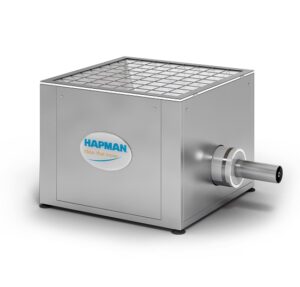
Volumetric Vs. Gravimetric Feeder Operation
How Much Control Is Achieved with Volumetric vs. Gravimetric Material Feeding? Whether you work in the manufacturing or production industry, you need the right feeder system to regulate the flow…
Read Time: 3 minutes
How to Choose the Right Conveyor System for Your Process: 6 Key Considerations from Hapman
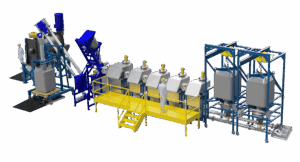
Choosing the right conveyor system for your batch or continuous processing application is rarely straightforward. Moving material efficiently, safely, and in line with production requirements—without contributing to dust, downtime, or…
Read Time: 3 minutes
5 Reasons to Avoid Round-Link Chains in Tubular Drag Conveyors
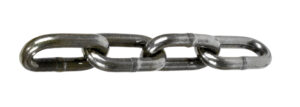
Tubular drag conveying is a common method of moving loose bulk materials between processes in industrial plants. Chain-type tubular drag conveyors fall into two basic categories: those that use round-link chains and…

Read Time: 2 minutes
Dust Control in Bulk Material Handling
Dust generation is one of the most persistent challenges in bulk material handling. It’s more than a housekeeping issue—dusting can present serious safety risks, lead to regulatory noncompliance, and reduce…
Read Time: 2 minutes
How the Right Flexible Screw Conveyor Design Boosts Productivity
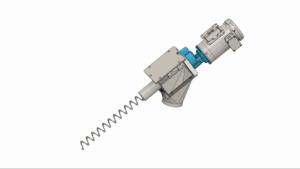
Flexible screw conveyors are one of the most common types of conveyors used by manufacturers because of their low cost and simple construction. Although it isn’t a complicated piece of…

Read Time: 3 minutes
6 Key Factors to Consider When Choosing a Conveyor for Bulk Material Handling
Selecting the right conveyor for your bulk material handling process isn’t always as simple as it seems. Every application involves unique challenges — from material properties to plant layout —…
Read Time: 3 minutes
How the “Bend But Don’t Break” Principle Applies to Tubular Drag Conveyors
If you’re a sports fan, you know that the term “bend but not break” refers to a football defense that gives up yardage but doesn’t allow the opponent into the…

Read Time: < 1 minute
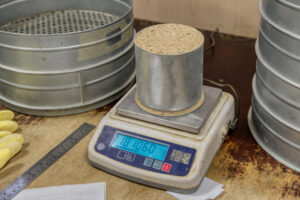
Bulk density is an important calculation if you want your equipment sized correctly. Here are a few simple steps to determine your material’s bulk density. Notes: Mass of Hapman cup…
Read Time: 2 minutes
When you’re generating saleable product, weight in KG or LBS is often the most important number. Operators often have the target weights engrained in memory. Unfortunately, the movement of material…

Read Time: 8 minutes
Moving Material through a Process: A Guide to Selecting the Right Conveyor
Summary The proper selection and sizing of a conveyor is critical to successfully meeting production goals. The key factors that should be evaluated when choosing a conveyor are; material, operation,…